
How Long Does an Outdoor Sauna Last? Lifespan by Build Quality
A properly built and maintained outdoor sauna can remain useful for 20 to 30 years or longer, while a carefully detailed custom cabin can be designed for several decades of service. A poorly installed sauna that traps water or cannot dry may need major repairs much earlier.
The words kit and custom don't determine lifespan on their own. Water management, ventilation, materials, foundation, maintenance and repairability do.
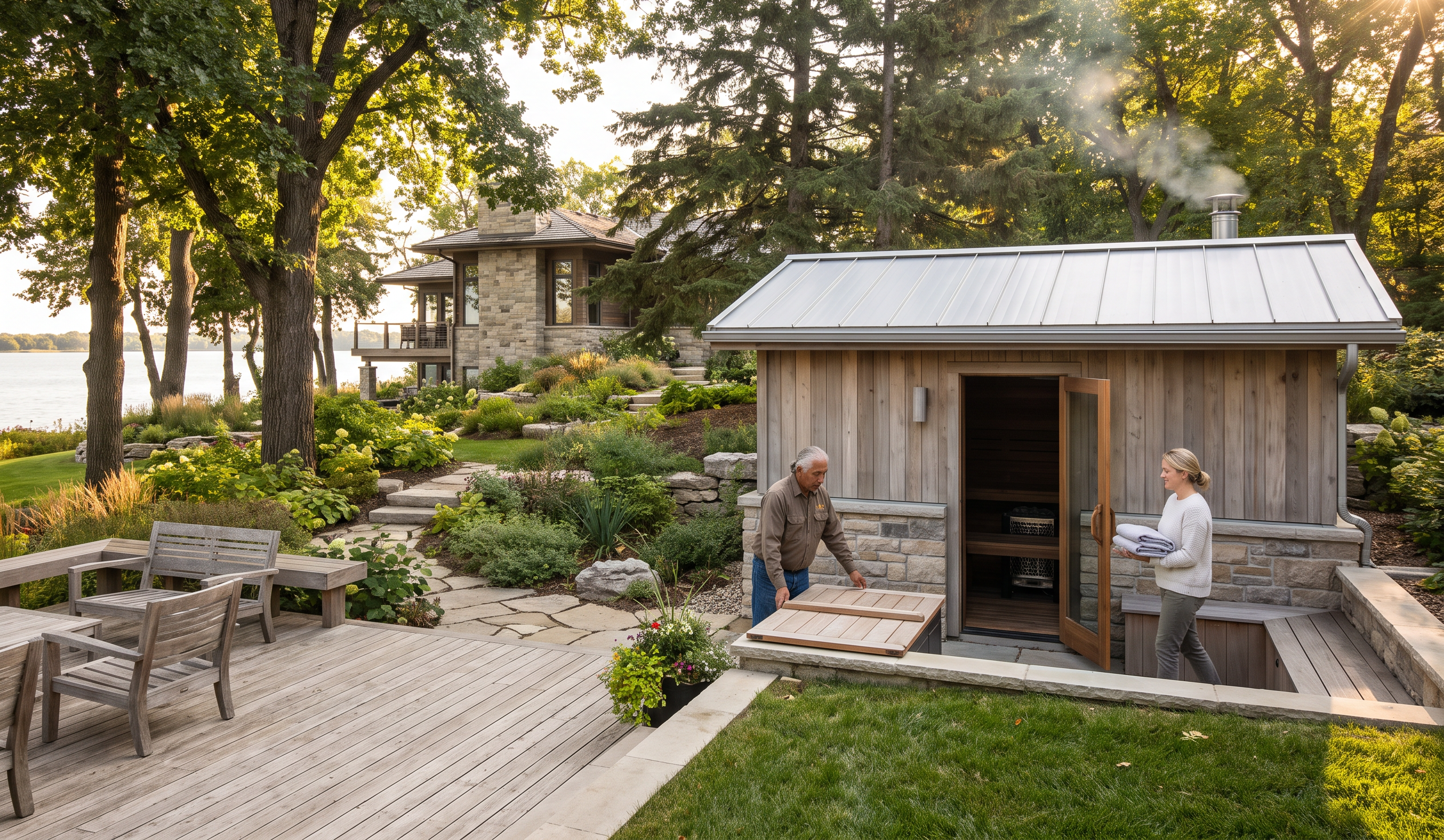
Direct answer
There is no reliable industry-wide study proving that all sauna kits last one number of years and all custom saunas last another.
A high-quality kit on a proper base can last for decades. A badly designed custom sauna can fail early. The strongest long-term advantage of a custom cabin isn't the word "custom." It's the builder's ability to control the roof, walls, foundation, moisture, ventilation, service access and replacement of individual components.
Why sauna lifespan is difficult to reduce to one number
An outdoor sauna is not one product with one expiration date. It's a collection of components with different service lives: structure, foundation, roof, exterior cladding, door and glazing, interior panelling, benches, heater, controls and sensors, lighting, chimney where applicable, ventilation components, and fasteners and hardware.
The heater may eventually need elements, controls or replacement while the building remains sound. Exterior cladding may need refinishing while the wall behind it remains dry. Benches may need sanding or replacement without affecting the structure.
A warranty also doesn't tell you how long the sauna will last. One major sauna-kit manufacturer offers a limited lifetime warranty against manufacturing defects, but excludes normal weathering, wear, rot, improper assembly and weather events. That protects against certain factory defects, not every condition that determines outdoor service life.
Practical lifespan planning ranges
The following ranges should be treated as financial stress-test horizons, not promises or warranties.
Construction approach: Lightly detailed or poorly protected outdoor sauna
Useful planning horizon: Test the economics at 10 to 15 years
Important qualification: Major repair risk can appear earlier if water is trapped
Construction approach: Quality kit on a proper base with roof protection and regular maintenance
Useful planning horizon: Test at 15 to 25 years
Important qualification: Some units will last longer; maintenance and installation dominate
Construction approach: Properly detailed custom insulated cabin
Useful planning horizon: Test at 25 to 40-plus years for the core structure
Important qualification: Heaters, controls, finishes and other components may be replaced sooner
These are builder planning assumptions intended to help compare risk. They are not published industry averages.
Material-level durability data helps show why the ranges can vary. Thermory, for example, publishes exterior decay-resistance expectations of approximately 15-plus years for some thermally modified pine products and 25-plus years for certain thermally modified ash products when installed and maintained properly. That describes the material's resistance in an intended exterior application, not the guaranteed life of an entire sauna building.
Water is usually the real enemy
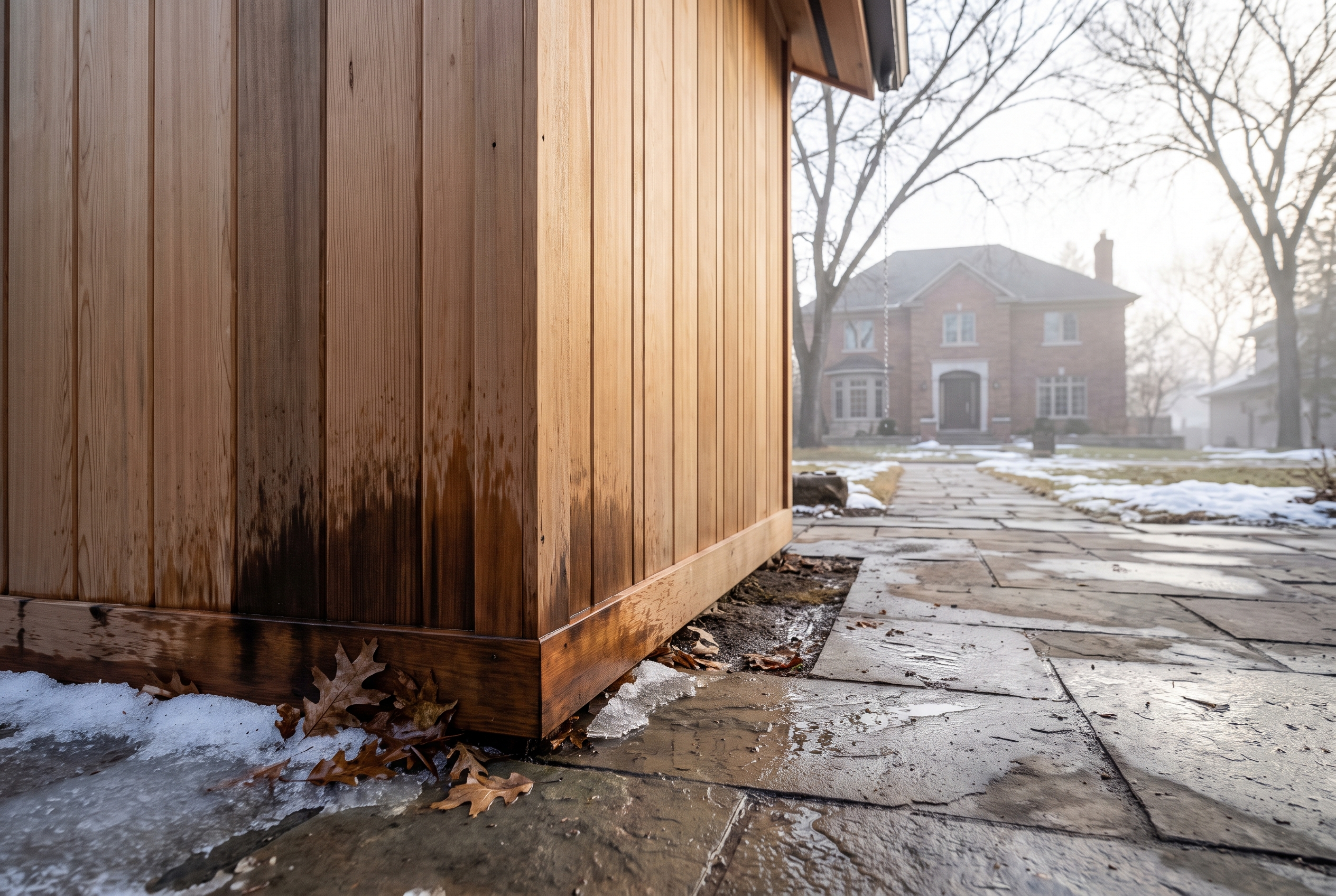
Heat does not usually destroy an outdoor sauna first. Water does.
Wood-decay fungi require sustained moisture. Forest Products Laboratory research commonly treats wood moisture content below approximately 20 percent as a practical threshold that limits decay risk. The exact behaviour depends on species, temperature, exposure and duration, but the principle is clear: wood that repeatedly gets wet and cannot dry is vulnerable.
Water can reach a sauna through roof leaks, poor flashing, wind-driven rain, snowmelt, splashback, exposed end grain, water trapped beneath the structure, leaking door and window transitions, failed exterior coatings, condensation inside wall or roof assemblies, or shower or plunge water directed toward the foundation.
The issue isn't that wood must never get wet. Outdoor wood will get wet. The issue is whether the structure sheds that water and dries before moisture sticks around long enough to cause deterioration.
Why a rainscreen can extend exterior life
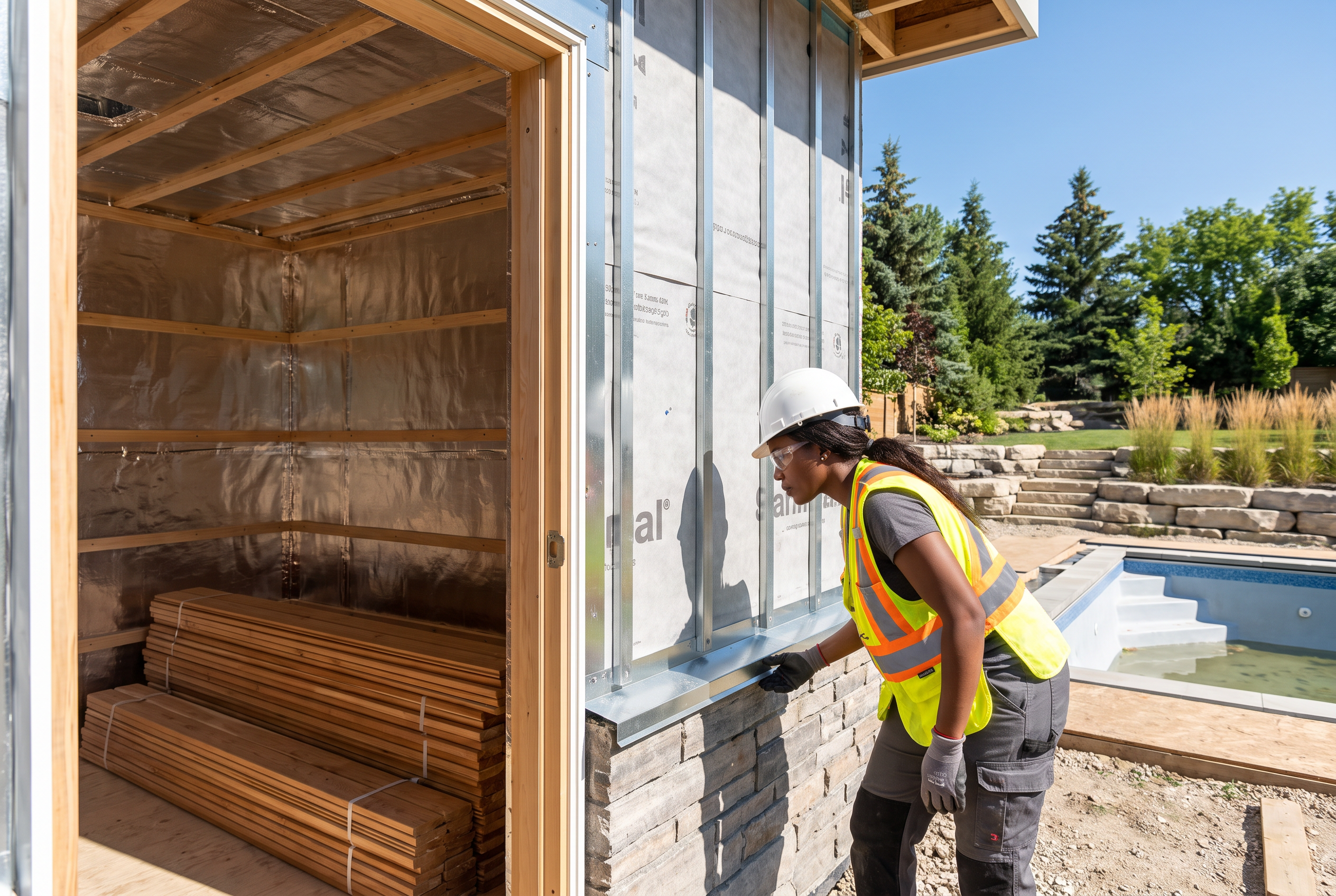
A custom cabin can use separate layers for separate jobs. The exterior cladding manages sun and most rain. A drainage plane behind it manages water that passes through. A cavity creates drainage and drying space. Flashing directs water out at windows, doors, penetrations and the bottom of the wall.
Building Science Corporation describes rainscreen walls as cladding installed over a ventilated and drained cavity, with flashing at openings and transitions. Its guidance also recommends installing wood siding over furring to create a drained and vented space behind the cladding.
This is different from relying on one exposed wood shell to perform every function. A barrel or solid-wood kit can still last when it's installed and maintained correctly. Its ownership requirements are simply different. Manufacturers commonly advise owners to monitor stave movement, tighten bands where needed and add exterior weather protection.
Roof and flashing details matter more than most buyers realize
A sauna roof should move water away from the walls, door, window and base.
Common weak points include minimal roof projection, no defined drip edge, weak chimney flashing, water running onto door trim, roof membranes ending incorrectly, horizontal surfaces that hold snow or water, unprotected wall-to-roof transitions, and exterior cladding too close to grade.
These details often appear small during construction. They become important after hundreds of rain, snow and freeze-thaw cycles.
Freeze-thaw movement does not create wood decay by itself. It can, however, open joints, stress sealants, move doors and expose weak water-management details. Once liquid water enters and remains trapped, deterioration becomes more likely.
Ventilation is also a durability system
Ventilation is usually discussed as a comfort issue. It's also part of drying.
After a sauna session, moisture remains on benches, floors, walls, stones, buckets and other surfaces. The room needs enough residual heat and controlled airflow to dry those materials.
Harvia recommends removing wet items, wiping visible water, keeping the heater on briefly after bathing and using the ventilation and door position to support drying. Its cold-weather guidance also notes that bringing large amounts of cold exterior air into the room can work against effective drying, so the exact procedure should follow the sauna's ventilation design.
Poor drying can lead to persistent damp odours, surface mould or mildew, staining, swollen wood, corroded fasteners, premature finish breakdown, and moisture reaching hidden assemblies.
A sauna that gets wet is normal. A sauna that stays wet is a problem.
Cheap wood is not the whole problem
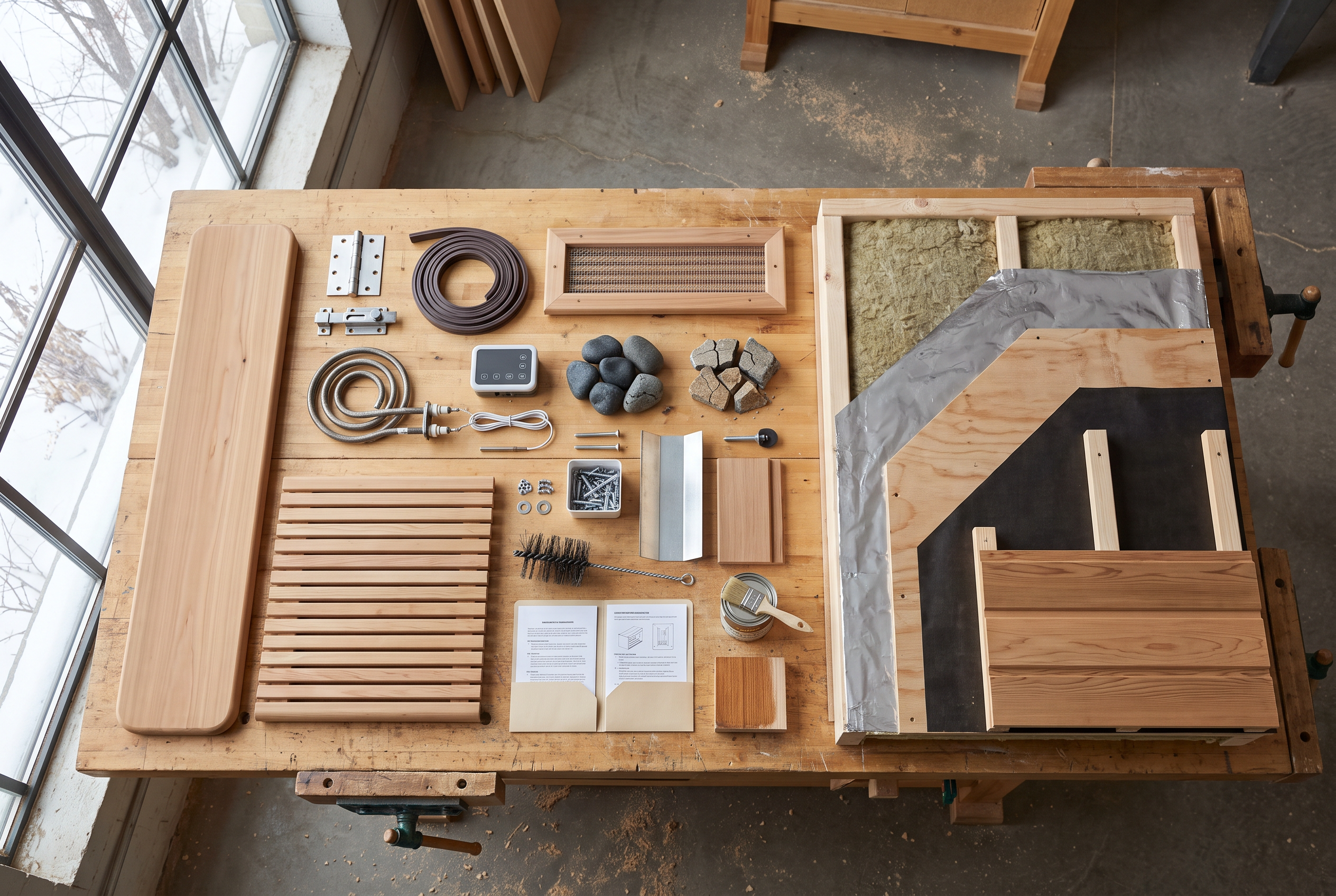
"Cheap wood" is often blamed for early failure, but that description is too simplistic. A knotty softwood may serve adequately in the right application. A premium wood species can still fail when installed where it traps water.
The relevant questions are whether the species suits the exposure, whether the wood is dry and stable at installation, whether end grain is protected, whether the back of the board can dry, whether the fasteners are compatible, whether the material touches soil or standing water, whether the profile sheds water, and whether damaged boards can be replaced individually.
Thermal modification can improve dimensional stability and biological durability, but it doesn't make detailing irrelevant. Thermory describes thermally modified wood as more stable and decay resistant, while still requiring proper installation and maintenance for long service.
Foundation quality affects everything above it
A sauna that begins out of level rarely improves with time.
Foundation movement can cause door misalignment, glass stress, open cladding joints, roof-drainage problems, uneven floors, bench movement, and water collecting beneath the structure.
The correct support depends on the property and sauna design. It may involve helical piles, concrete pads, a slab, structural skids, properly prepared pavers, or another engineered support system. Whatever the method, the structure should remain level, keep vulnerable wood away from standing water and provide enough drainage and airflow around the base.
Harvia's general outdoor-sauna guidance also emphasizes a level, stable base with drainage and airflow around the structure.
Kit vs. custom: which lasts longer?
The honest answer is that the better-built, better-installed and better-maintained sauna lasts longer. A quality kit may outperform a poorly built custom structure. The difference is how much control and responsibility each approach provides.
A kit usually gives the buyer standardized materials, standardized dimensions, manufacturer instructions, a defined product warranty, and owner or third-party assembly responsibility, along with more limited control over hidden assemblies and potential dependence on shipped replacement parts.
A custom cabin can provide property-specific foundation design, layered wall and roof assemblies, better integration of flashing and cladding, planned ventilation and drying, serviceable benches and floor panels, local trade coordination, easier access for repairs, and local warranty and ongoing inspection support.
The custom advantage isn't immunity from maintenance. It's the ability to design maintenance and repair into the structure.
Repairability is part of longevity
A structure lasts longer when worn components can be replaced without dismantling the entire sauna.
Useful serviceability features include removable floor panels, accessible heater controls, replaceable bench boards, accessible vents, documented wiring routes, replaceable exterior cladding, service access to plumbing or plunge equipment, replaceable door seals and hardware, chimney components that can be inspected, and roof and flashing details that remain visible.
A sealed product that can't be opened without damage may be difficult to repair even when the underlying problem is small. A properly planned custom sauna should anticipate that heater stones, elements, lighting, controls, door hardware and some wood components will require attention long before the structural enclosure reaches the end of its life.
Repairability is part of longevity
A structure lasts longer when worn components can be replaced without dismantling the entire sauna.
Useful serviceability features include removable floor panels, accessible heater controls, replaceable bench boards, accessible vents, documented wiring routes, replaceable exterior cladding, service access to plumbing or plunge equipment, replaceable door seals and hardware, chimney components that can be inspected, and roof and flashing details that remain visible.
A sealed product that can't be opened without damage may be difficult to repair even when the underlying problem is small. A properly planned custom sauna should anticipate that heater stones, elements, lighting, controls, door hardware and some wood components will require attention long before the structural enclosure reaches the end of its life.
What does longevity look like in Manitoba?
A Manitoba outdoor sauna should be designed for more than one harsh condition. It must manage deep winter cold, wind, snow accumulation, spring melt, heavy summer rain, UV exposure, repeated heat-up and cooling cycles, wet footwear, water carried from showers or plunges, and seasonal foundation movement.
The correct response isn't simply thicker wood. It's a complete assembly: stable foundation, insulated structure, continuous hot-side foil and air control, proper roof, water-resistive exterior layer, flashing, rainscreen, durable cladding, controlled ventilation, drying strategy, and serviceable components.
A real Turon construction perspective
Turon has not been operating long enough to claim a 20- or 30-year history of completed sauna projects. That should be stated honestly.
What Turon can show is how its outdoor build was approached from the beginning. The completed outdoor sauna was treated as a small cold-climate building rather than a decorative wood box. The project incorporated helical-pile support, insulated wall and ceiling construction, hot-side foil and sealed detailing, exterior water-resistive protection, rainscreen space behind the siding, metal roofing, carefully planned flashing, elevated wood components, removable floor panels, and serviceable benches and interior components.
Those decisions don't prove a future service-life number. They reduce known durability risks and make the sauna easier to inspect, dry, maintain and repair.
Turon also provides a three-year warranty, subject to the final project agreement, and offers the Turon Care Package for annual maintenance and routine inspection.
Cost per year: a better comparison
Sticker price doesn't show lifetime value. A simple formula is:
Completed project cost ÷ years of useful service = annualized capital cost
Consider four illustrative scenarios:
Hypothetical completed project: $18,000 completed kit project
Stress-test service horizon: 15 years
Simple capital cost per year: $1,200
Hypothetical completed project: $22,000 higher-quality kit project
Stress-test service horizon: 20 years
Simple capital cost per year: $1,100
Hypothetical completed project: $45,000 custom cabin project
Stress-test service horizon: 30 years
Simple capital cost per year: $1,500
Hypothetical completed project: $45,000 custom cabin project
Stress-test service horizon: 40 years
Simple capital cost per year: $1,125
These examples are not quotes or lifespan promises. They exclude maintenance, repairs, energy, financing, resale value, replacement heaters, landscaping, lost use during failure, and removal and disposal at end of life.
The table shows why lifetime value is more complicated than "kit cheap, custom expensive." A premium custom sauna may still cost more per year. But if it lasts longer, is used more frequently, performs better in winter, can be repaired locally and integrates more strongly with the property, the real value gap may be much smaller than the sticker-price gap suggests.
Questions to ask before you buy
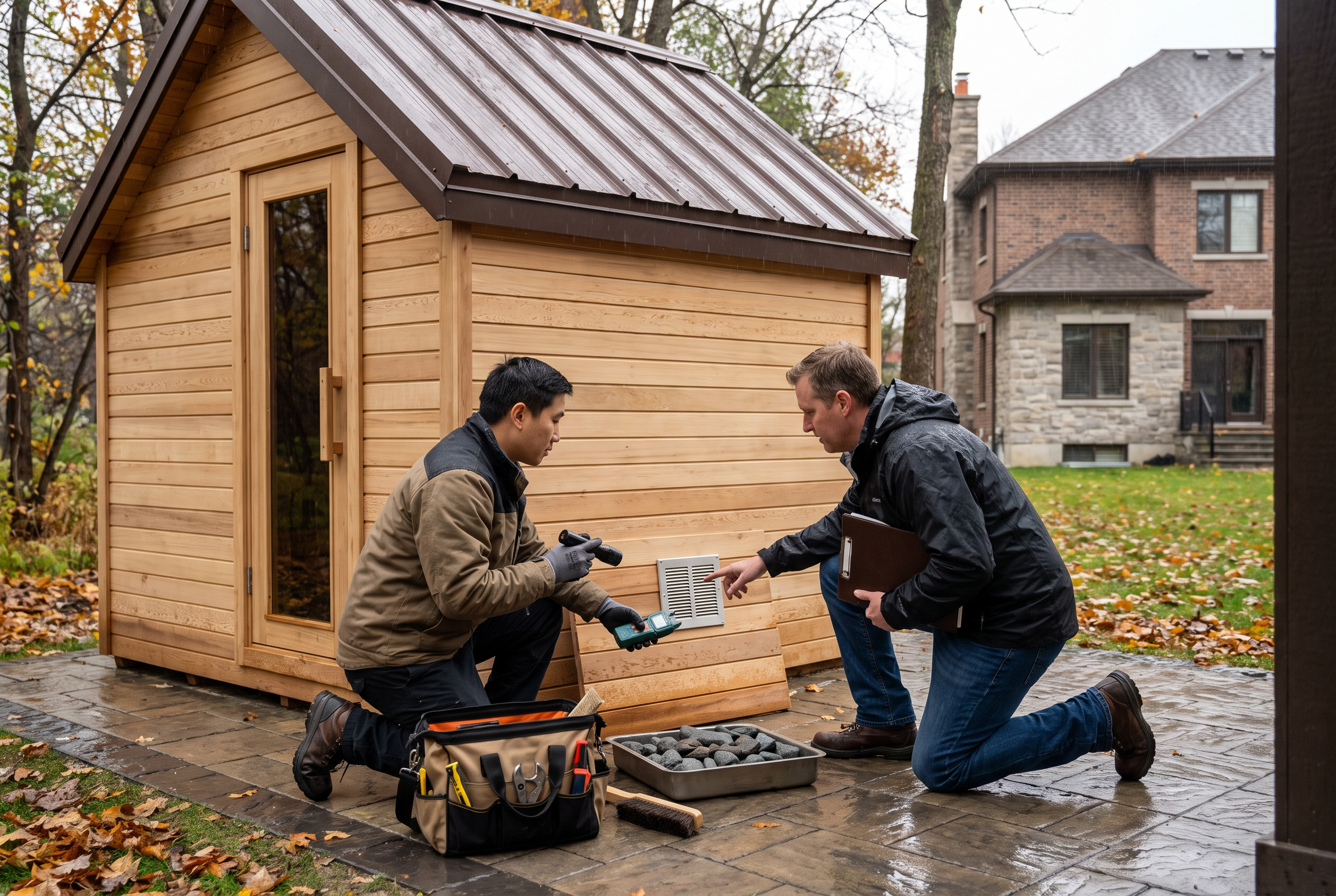
Ask any sauna seller or builder how water drains from the roof, walls and base, what's behind the exterior cladding, how the wall dries, what the warranty excludes, who pays for labour and freight on warranty parts, whether the door, benches, floor and cladding can be repaired individually, how the sauna is dried after use, what requires annual maintenance, whether the builder can return for service, and what happens if the foundation moves.
The quality of those answers will tell you more than an unsupported "built to last" claim.
The Turon view
A long-lasting sauna isn't created by one premium material. It's created by dozens of ordinary details done correctly: water moves out, moisture can dry, wood stays away from standing water, the exterior can be inspected, the heater and controls can be serviced, worn components can be replaced, the foundation stays stable, the owner understands maintenance, and the builder remains available.
That's where a custom cabin can justify its cost. Not because every kit is temporary. Not because custom construction is automatically permanent. Because a builder can design the entire sauna around durability, repairability and the Manitoba environment, rather than asking one exposed product shell to do everything.
A sauna should look impressive when it's finished. The better question is whether it was built to remain useful years after the first photographs are taken.
Frequently Asked Questions
Can an outdoor sauna last 30 years?
Yes, a properly detailed and maintained outdoor sauna can remain useful for 30 years or longer. The structure may last while heaters, controls, door hardware, finishes and other components are replaced along the way. There is no universal guarantee because water exposure, maintenance and construction quality vary.
How long does a barrel sauna last?
There is no reliable universal number. A quality barrel on a proper base with good roof protection and regular stave, band and finish maintenance may last for decades. A barrel that admits water, sits unevenly or receives no exterior care may need major work much earlier.
Do sauna kits rot?
They can, but rot is not automatic. Decay risk increases when wood remains wet, touches soil or standing water, or cannot dry. Installation quality and ongoing maintenance are major factors.
How often should an outdoor sauna be maintained?
Basic cleaning and drying happen continuously. Exterior, roof, drainage, door and foundation inspections should occur at least seasonally. Heater stones and major systems should be inspected at least annually, with more frequent service for heavy use.
Does ThermoWood make a sauna maintenance-free?
No. Thermal modification can improve stability and decay resistance, but the material still needs correct installation, drainage, ventilation and cleaning. Exterior colour retention may also require finishing.
Is a longer warranty the same as a longer lifespan?
No. A warranty covers specific defects under stated conditions. Normal weathering, rot, maintenance failures, labour, freight or improper installation may be excluded. Read the actual warranty rather than judging by the headline duration.
Planning an outdoor sauna in Winnipeg or Manitoba? Book a consultation with Turon Saunas to review the foundation, roof, wall assembly, moisture control, ventilation, materials and maintenance plan before construction begins.
The goal isn't only to build a sauna that looks premium on completion day. It's to build one that can be inspected, maintained, repaired and enjoyed for years to come.
