
Saunas and Skin: Benefits, Myths, and Aftercare
People often talk about saunas like a skin treatment. The logic feels obvious: you heat up, you sweat, your face looks brighter afterward, and it's an easy leap from there to assuming sauna use must deeply cleanse the skin, cure breakouts, or "detox" the body through sweat. The truth is more measured. Saunas can support skin health in real ways, mostly through circulation, relaxation, and better self-care habits, but a lot of the strongest beauty claims online go well past the evidence. A sauna can help your skin look and feel better. It's not a substitute for skincare, hydration, or medical treatment.
Why people think saunas help skin
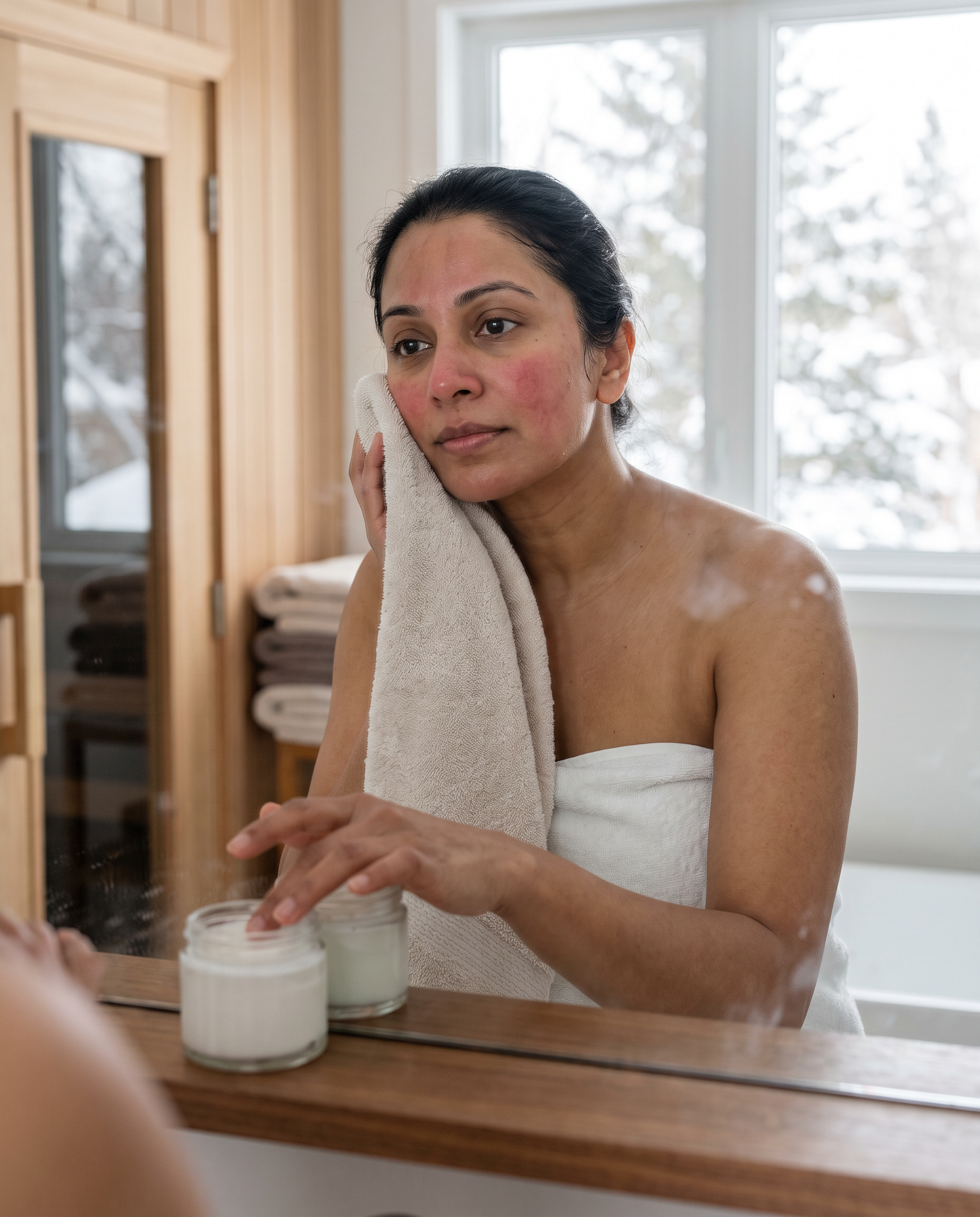
The most obvious reason is the immediate visual effect. After a sauna session, skin often looks warmer, slightly flushed, and more vibrant, mostly because heat increases circulation near the skin's surface as the body sends more blood there as part of its natural cooling response. That reads as brightness or freshness.
Sweating plays into the perception too. Skin can feel cleaner afterward simply because heat, sweat, and rinsing tend to happen together as one reset ritual, but that feeling isn't proof the sauna has "purified" anything.
What saunas may actually do for skin
The realistic benefits are indirect and supportive rather than dramatic. Heat improves circulation temporarily, which creates the healthy-looking post-sauna glow a lot of people enjoy. Saunas may also support relaxation, and while stress doesn't cause every skin issue, it can aggravate some of them, so anyone who breaks out more under stress or notices their skin worsen when run down might see an indirect benefit from a ritual that helps them slow down.
Regular sauna use also tends to encourage better habits overall. People who use a sauna consistently are more likely to drink water, rinse after sweating, moisturize, and keep up a repeatable wellness routine. The sauna isn't performing magic on the skin directly. It's becoming part of a broader system of better care, and that's genuinely worth something.
What saunas don't automatically do
This is where most of the myths start. A sauna doesn't "detox" the skin the way it's often described online. Sweating is a normal cooling response that removes water and small amounts of salts and other substances, but the liver and kidneys are doing the real work of detoxification, not your skin.
A sauna also shouldn't be treated as a cure for acne. Sweating can loosen oil and surface debris temporarily, especially if you shower afterward, but it can also cause problems if sweat sits on the skin too long or mixes with makeup, bacteria, and friction. For people prone to acne, what happens after the session usually matters more than the session itself.
A sauna doesn't permanently improve skin tone or tighten skin in any major way, and it doesn't replace proven skincare either. The glow is real. It's just usually temporary, which doesn't make sauna use pointless, just more modest and more routine-based than the marketing around it suggests.

Aftercare matters more than most people think
If the goal is healthier-looking skin, aftercare can matter as much as the session itself. Start by rinsing off, nothing aggressive, just a gentle shower to remove sweat, salt, and surface residue. If you wear makeup, take it off before the sauna rather than sweating through it.
Moisturize after cleansing. Heat can leave some people feeling soft and refreshed, but it can also dry out the skin barrier, especially in winter or with repeated sessions, so a simple, fragrance-light moisturizer after showering helps lock in hydration. Drink water too. Skin doesn't benefit when sauna use becomes dehydrating, and if you leave a session feeling dry, headachy, or depleted, you've likely pushed too far or didn't rehydrate enough.
It's also worth skipping harsh exfoliation right afterward. A lot of people assume the skin feels "opened up" and treat that as the perfect moment to scrub aggressively, but for sensitive skin especially, that can backfire into irritation. Gentler usually wins here.
How often, for skin goals specifically
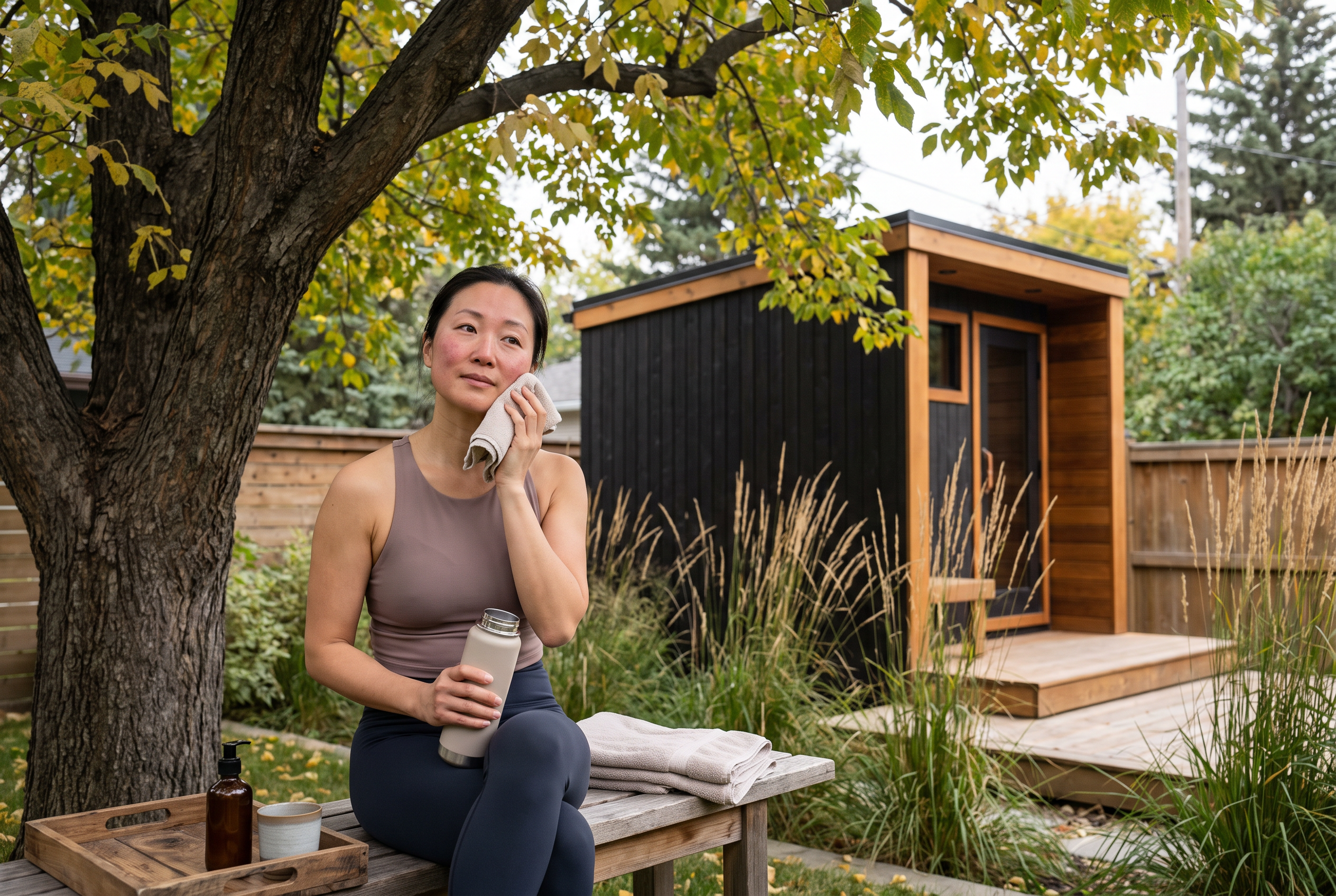
More isn't automatically better if skin is the goal. A moderate, consistent routine, a few sessions a week, usually makes more sense than chasing long, punishing sessions or trying to sauna daily for cosmetic reasons alone. Session length depends on the person, the heat, and tolerance, but the right length is the one that leaves you warm and relaxed and able to recover well, not the one that leaves you depleted. If skin gets tight, irritated, excessively flushed, or dry afterward, dial back the intensity, the frequency, or improve the aftercare. The goal isn't forcing the skin into submission. It's supporting it.

Sensitive skin needs more caution
Not everyone responds to heat the same way. People with very dry skin, eczema-prone skin, rosacea, or general heat sensitivity may find sauna use aggravates redness, dryness, or irritation. That doesn't rule out sauna use, but it does mean approaching it more carefully: shorter sessions, lower heat exposure, slower cooling afterward, immediate moisturizing, fewer sessions each week, and stopping entirely during active flare-ups. If hot showers, hot rooms, or exercise-induced flushing already trigger skin issues for someone, sauna needs the same caution rather than getting treated as a universal beauty tool. And for anything significant, persistent, or medically diagnosed, a dermatologist is the right person to guide the decision, not a wellness routine.
The Turon view
A home sauna isn't a miracle skin machine, but it can become part of a genuinely good daily or weekly routine that supports how people feel in their bodies, and that often shows up in the skin too. The value isn't the hype. It's the consistency: a sauna in your own backyard lets you use it in a measured, repeatable way, follow it with a proper rinse or shower, hydrate, moisturize, and build the whole thing into a rhythm instead of a one-off spa visit.
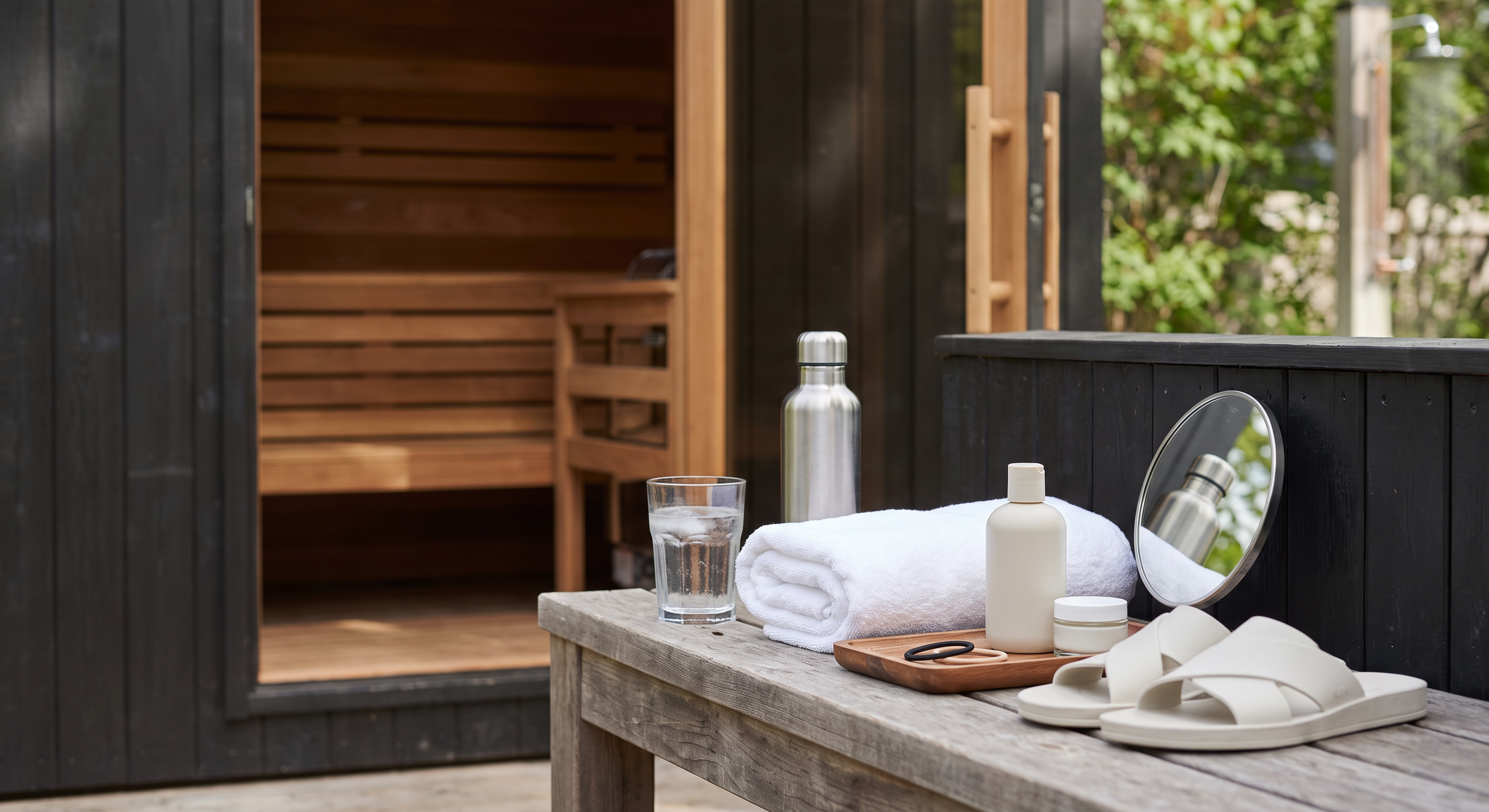
Design plays into that too. A good home sauna setup shouldn't only focus on the hot room, it should make the transition easy: outdoor shower access, somewhere for towels, a bench to cool down, privacy, and a layout that actually supports the routine. For skin, that consistency matters more than any extreme claim ever will. A sauna might give you a temporary glow. Good habits are what make it last.
This article is for general educational purposes and is not medical advice. Anyone with a chronic skin condition, significant heat sensitivity, or concerns about rosacea, eczema, or other skin disorders should speak with a qualified healthcare professional or dermatologist.
