
The Ideal Sauna Setup for Post-Hockey and Winter Sport Recovery
In Winnipeg, winter sport isn't a niche interest. It's part of family life. Hockey practices, games, skates, and long hours in cold arenas leave players with stiff legs, sore hips, tired backs, and the general fatigue that comes with repeated winter training. For a lot of families, recovery ends up reactive: get home late, unload the gear, eat something, hope everyone feels better by morning.
A good home sauna setup helps here, not because it's trendy and not because it replaces sleep, food, hydration, or real medical care, but because it creates a recovery ritual families can actually repeat, right at home. The strongest setup for post-hockey and winter sport recovery is usually a traditional outdoor sauna paired with a simple contrast routine and a layout built to work in real Manitoba winter conditions.
Start with the right type of sauna
A traditional insulated outdoor sauna is usually the strongest option here. It gives you real room heat, hot stones, and the choice of dry heat or added steam for a more complete experience, which matters for recovery because the whole ritual feels substantial instead of partial: the benches warm up, the air warms up, everything works together.
For hockey families specifically, an insulated cabin-style sauna usually beats an infrared unit or a minimal shell. You need something that works reliably in January, recovers fast when the door opens, and gives enough room for more than one person at a time. The structure matters as much as the heater: good insulation, proper ventilation, elevated upper benches, safe access, durable finishes, and real cold-climate detailing all decide whether the sauna becomes a dependable recovery tool or just a novelty that stops getting used by February.
Use heat and contrast intelligently
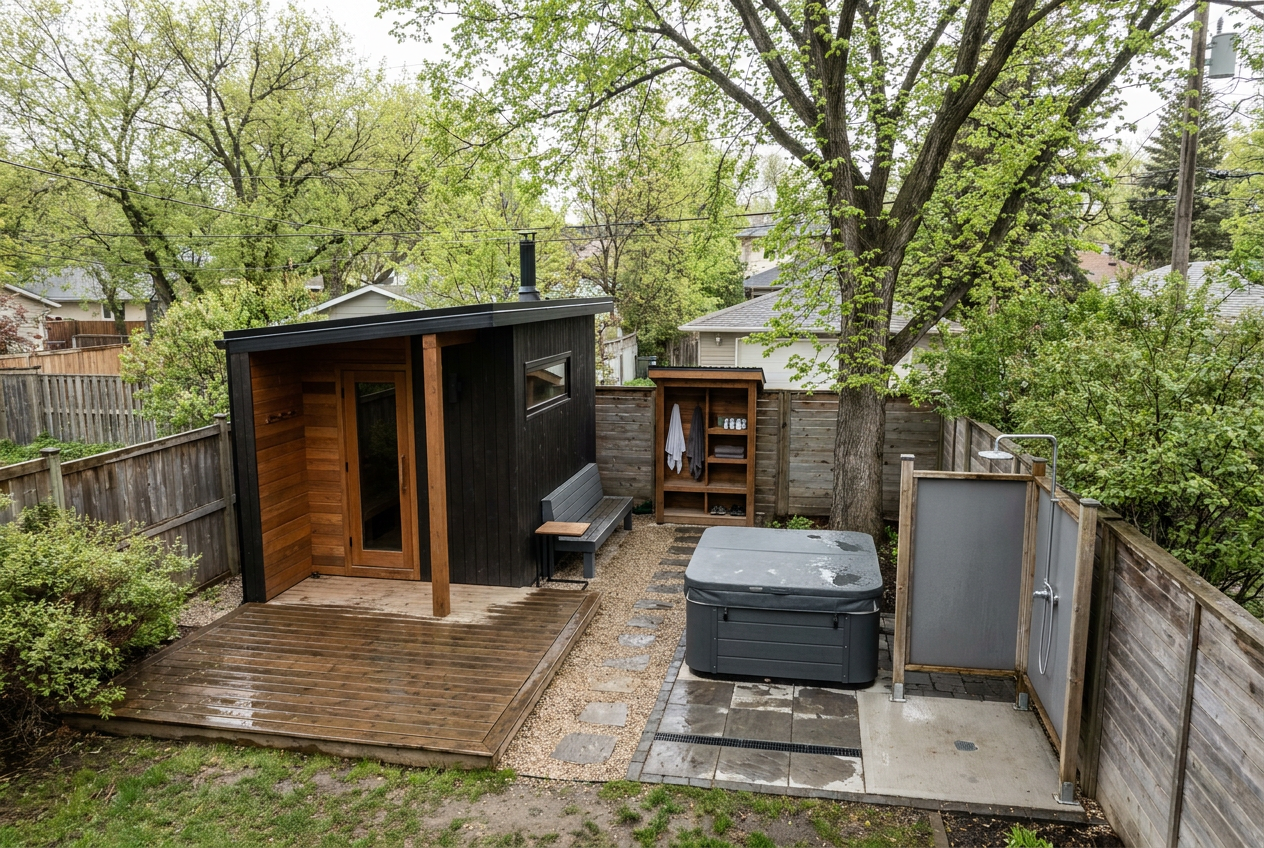
Post-game recovery doesn't need to be extreme to work. A practical routine for most families looks like: warm up in the sauna, cool down with fresh winter air, a cold shower, or a plunge, then rest and repeat if it feels good. One or two rounds is plenty most nights. After a harder game or a tournament weekend, some athletes might want a few more cycles.
The point isn't punishment. It's helping the body unwind, taking the edge off stiffness, and marking a real transition from competition mode into recovery mode. A dedicated cold plunge gives the most controlled contrast, but it's not the only option. A well-placed cold shower works well too, and in a Manitoba winter, snow and cold air can genuinely be part of the experience if the layout is safe.
For younger athletes especially, moderation is the key. Sessions should feel restorative, not forced, and recovery routines need supervision, hydration, and common sense. If someone's injured, unwell, dizzy, or not tolerating the heat or cold well, the session stops.
Build the setup for real family use
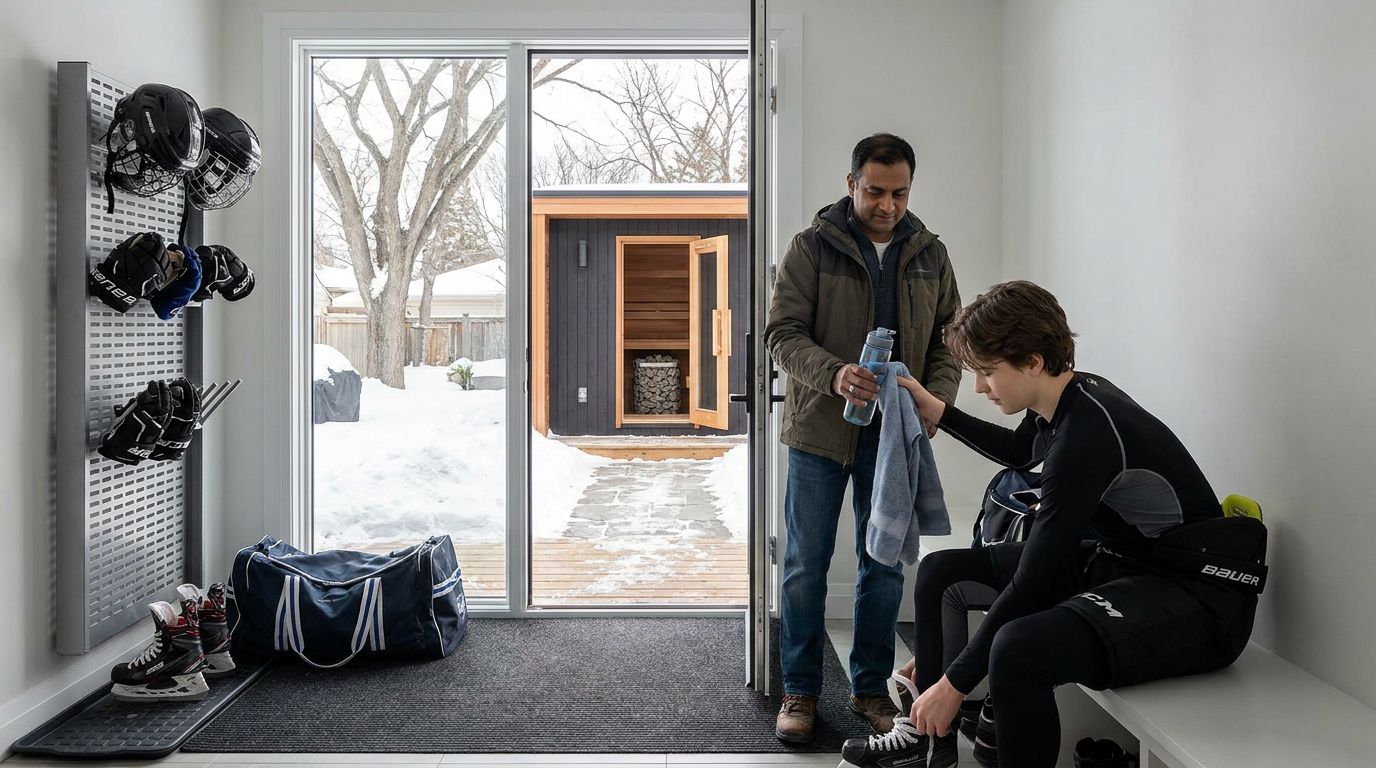
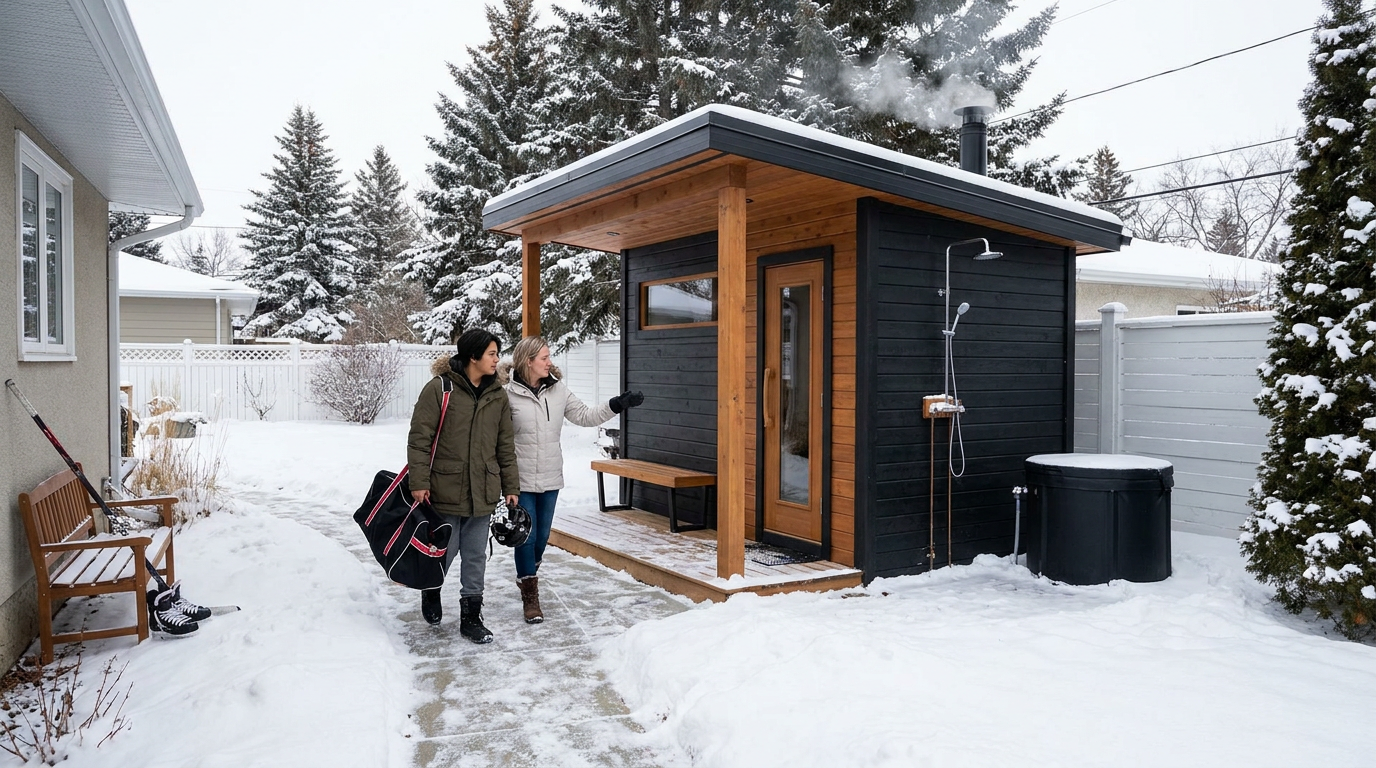
A sauna sounds appealing in theory, but if the route to it is awkward, the plunge sits too far away, the path ices over, or there's nowhere to put towels and sandals, the routine won't survive the season. For a hockey family, the strongest layout usually includes a short, easy route from the house or garage, a deck or platform with slip-resistant surfaces, a nearby cold plunge or shower, privacy screening, lighting for winter evenings, somewhere to sit and hydrate, and hooks, shelves, or a small vestibule for robes, towels, and footwear. This matters more in Winnipeg than almost anywhere, given how much of the season involves snow, freezing temperatures, darkness, and people moving in and out repeatedly.
A vestibule or small change room earns its keep here. It buffers the cold, gives people somewhere to transition, and keeps the hot room from turning into a clutter zone, which matters a lot when several family members are rotating through after a practice or game.
Size it for the family you actually have
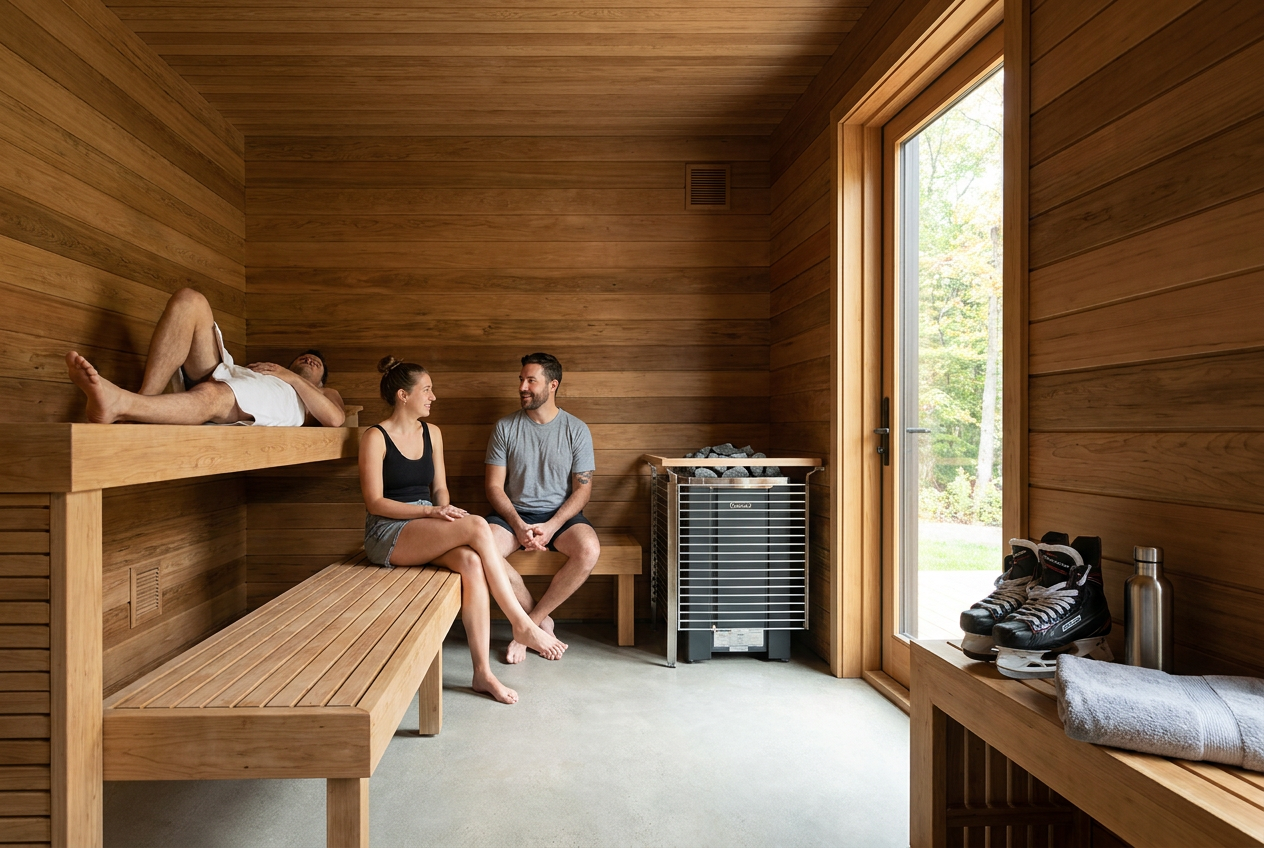
Sizing by the manufacturer's capacity label alone is one of the biggest mistakes in planning a recovery sauna. A "four-person" sauna might technically fit four people without actually working for a family of active players, since recovery use isn't the same as just squeezing bodies into a hot room. You probably want enough room for a parent and one or two kids at the same time, a full-length upper bench so someone can actually lie down after a game, and a lower bench or step that makes the room easier and safer for kids to use.
A compact sauna is fine for a couple or a single main athlete. For an active family, a more generous layout is usually worth it: one strong upper bench, usable lower seating, and enough circulation space beats a tight room that forces everyone shoulder to shoulder. If more than two people will use it regularly, or you want the option of recovering together as a family after hockey or skating, it's usually worth sizing up rather than regretting a cramped layout later.
Integrate the contrast setup properly
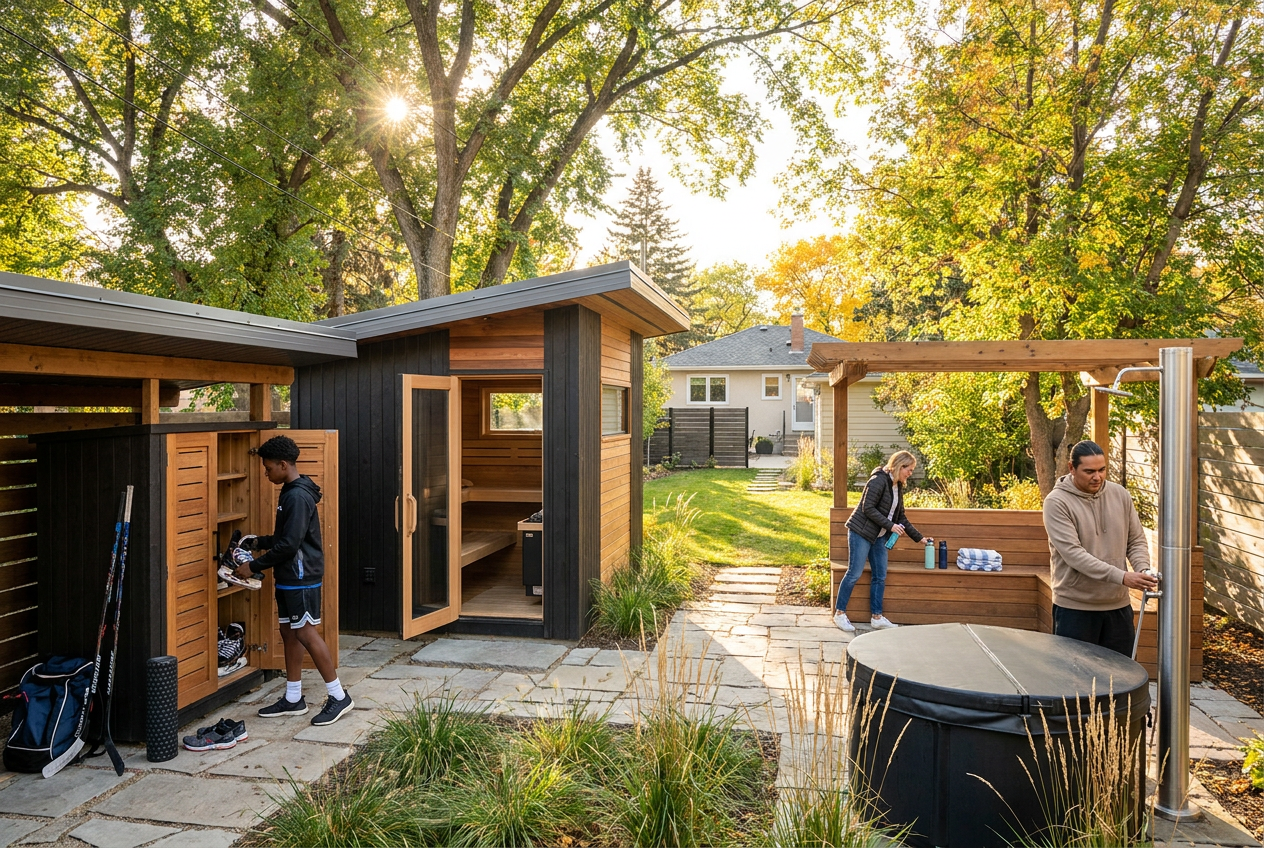
A plunge tub looks great in a photo, but the real question is whether the setup actually works day to day. The cold station needs to sit close enough to the sauna that the transition feels easy, not a walk across the yard in freezing weather, and the route needs to stay safe underfoot and easy to maintain through winter. Drainage matters too: snow melt, shower water, and splash-out all need somewhere to go, and so does privacy, since recovery becomes a real habit faster when the space feels comfortable and protected rather than exposed.
For some properties, a cold plunge right beside the sauna deck is the answer. For others, it's a cold shower plus winter air. Often the simplest setup is the one that actually gets used the most. That's the real design question: not what looks most dramatic, but what a specific family will actually keep using.
Build a routine that lasts
The setup that lasts through a long Manitoba winter beats the one that's most extreme on paper. That means the sauna heats reliably, the route stays easy, the contrast element feels approachable, and the space works for a quick weeknight session as well as a longer weekend reset, whether that's a short session after evening practice, a couple of contrast rounds after tournament games, or a weekend family reset after skating or another outdoor activity. The ritual is the value. Once it's part of family life, it stops being a luxury object and starts functioning as a real recovery routine.
The Turon view
This is one of the clearest reasons to build a custom outdoor sauna in Manitoba. Hockey and winter sport recovery aren't abstract wellness ideas here, they're part of how people actually live, which means the sauna should get designed around recovery flow, cold-climate use, bench comfort, family sizing, and whether the routine holds up in January when everyone's tired and the driveway's full of snow. A good post-hockey setup isn't just a hot room. It's a system: the sauna, the transition, the cooling option, the deck, the lighting, the privacy, and the small details that make the whole space easy to actually use, week after week.
This article provides general wellness information and is not medical advice. Anyone with a medical condition, pregnancy, cardiovascular concerns, or significant injury should speak with a qualified healthcare professional before beginning sauna or contrast-therapy routines.
